
Brickwork and Masonry Safety: More Than Just Laying Bricks
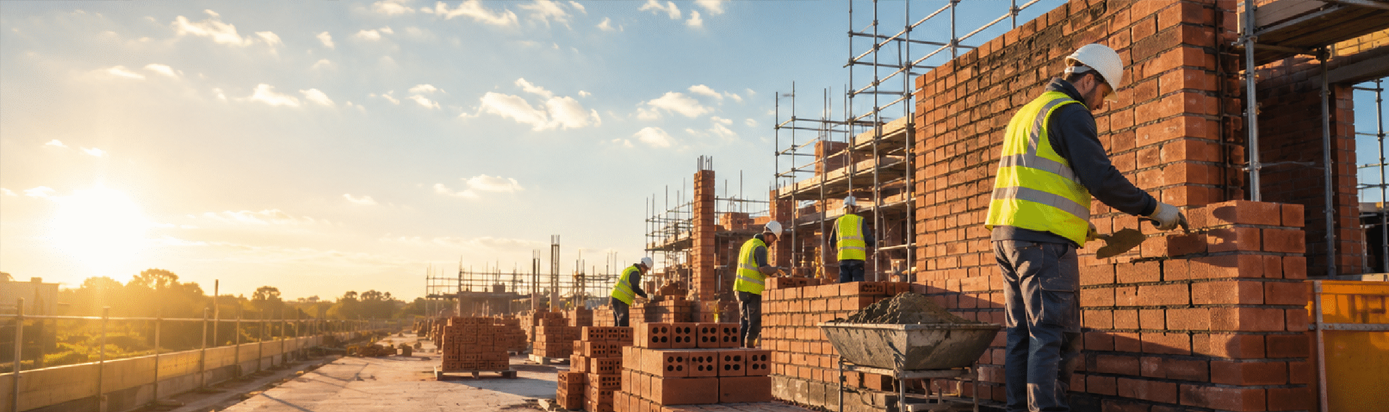
Brickwork and masonry are some of the most common trades found on construction sites. From boundary walls and building structures to alterations, repairs and finishing work, bricklayers and masonry workers play an important role in the strength, appearance and progress of a project.
However, because brickwork is often seen as a normal day-to-day construction activity, the risks are sometimes underestimated. Many people see it as simply mixing mortar, carrying bricks and building walls. In reality, brickwork involves heavy manual labour, exposure to cement, dust, working at height, scaffolding, cutting tools, unstable structures and the movement of materials around busy work areas.
When brickwork is not properly planned or supervised, the consequences can be serious. Workers may suffer back injuries, cement burns, eye injuries, respiratory problems, falls from height or injuries caused by falling materials. Poorly built or unsupported walls may also collapse, placing workers and the public at risk.
Brickwork and masonry safety is therefore not only about compliance. It is about planning the work properly, protecting workers, maintaining quality, preventing incidents and ensuring that the project can continue without unnecessary delays
|
What Is Involved in Brickwork and Masonry? Brickwork and masonry work may include the laying of bricks, blocks or stone, mixing and applying mortar, cutting materials to size, building walls, repairing damaged structures, constructing openings, working from scaffolding or ladders, and moving materials around the work area. On a construction site, bricklayers may work at ground level, on scaffold platforms, near open edges, close to other trades, or in areas where materials are being delivered and stored. The work can be physically demanding and often requires repetitive lifting, bending, twisting, reaching and working in awkward positions. The materials used can also create health and safety risks. Bricks, blocks, cement, lime, sand and mortar may seem ordinary, but they can cause injuries when handled incorrectly or when workers are not properly protected. Because brickwork is often done alongside other activities, such as plastering, electrical chasing, plumbing, roofing or structural work, good coordination is important. A safe brickwork area must be properly planned, kept clean and controlled so that workers are not exposed to unnecessary risks. Common Hazards in Brickwork and Masonry Manual Handling and Ergonomic Strain Brickwork involves frequent lifting and carrying of bricks, blocks, cement bags, mortar tubs and tools. Workers may bend, twist or overreach while placing materials, especially when working at low levels, high levels or in confined areas. Poor manual handling can lead to back injuries, shoulder strain, muscle fatigue, knee injuries and long-term musculoskeletal problems. These injuries may not always happen suddenly. In many cases, they develop over time due to repeated strain and poor working posture. Cement and Mortar Exposure Cement and mortar can be harmful to the skin and eyes. Wet cement is alkaline and can cause skin irritation, dermatitis and cement burns. Workers who handle mortar without gloves or who allow wet cement to remain on the skin may suffer painful injuries. Cement dust can also irritate the eyes, nose and throat. When workers are mixing cement, tipping bags, sweeping dry materials or cutting masonry products, they may be exposed to dust that can affect their health. Dust from Cutting, Chasing and Mixing Dust is one of the most common health risks in brickwork and masonry. Cutting bricks, blocks or concrete products can create fine dust that may be inhaled by workers. Dust exposure can cause coughing, breathing discomfort and long-term respiratory health problems if not controlled. Dry sweeping, poor housekeeping and working in enclosed areas without ventilation can make dust exposure worse. Dust can also affect other trades working nearby. Working at Height Bricklayers often work from scaffolding, mobile platforms, ladders or temporary access structures. When working above ground level, there is a risk of falling if platforms are incomplete, guardrails are missing, access is unsafe, or workers overreach. Falls from height can result in serious injury or death. Even a fall from a relatively low height can cause fractures, head injuries or permanent disability. Scaffolding Risks Scaffolding is commonly used during brickwork, especially when walls are built above normal reach height. Unsafe scaffolding can create major risks. These risks include missing guardrails, poor access, incomplete platforms, overloading with bricks and mortar, unstable bases, lack of inspection, or unauthorised alteration. A scaffold should never be treated as just a place to stand. It is a temporary structure that must be erected, inspected and used correctly. Falling Materials Bricks, blocks, tools, mortar and debris can fall from height if they are not properly controlled. Workers below may be struck by falling objects, especially where brickwork is being done above walkways, entrances or other work areas. Falling material incidents are often caused by poor stacking, overcrowded platforms, missing toe boards, poor housekeeping or work being performed above others without proper barricading. Unstable Walls and Structural Collapse Partly built walls may be unstable, especially before they are tied in, supported or cured. Strong wind, impact from materials, vibration, poor workmanship or incorrect sequencing can cause a wall to collapse. Unstable masonry can injure workers, damage property and create serious project delays. Temporary support may be needed where walls are not yet stable or where openings, alterations or demolition work are involved.
Poor Housekeeping Brickwork can quickly create a messy work area. Offcuts, broken bricks, cement bags, mortar spills, water, tools and leads can create slip, trip and fall hazards. Poor housekeeping also makes it harder for workers to move safely, especially when carrying heavy materials. A clean work area is one of the simplest but most important controls in brickwork safety. What Can Go Wrong? When brickwork and masonry safety is not properly managed, the consequences can affect both people and the project. A worker may suffer a serious back injury from lifting blocks incorrectly. Another worker may develop skin burns from prolonged contact with wet cement. Dust from cutting may expose workers and nearby trades to respiratory hazards. A scaffold platform may become overloaded with bricks and mortar, increasing the risk of collapse or instability. If materials are stacked too close to an edge, they may fall and strike someone below. If a partially built wall is left unsupported, it may collapse during strong wind or when struck by equipment or materials. If walkways are blocked by bricks and debris, workers may trip while carrying loads. These incidents can lead to injuries, medical treatment, lost time, compensation claims, damage to property, stoppages by the client or principal contractor, and possible legal consequences. Poor safety management can also affect productivity, quality of work and the contractor’s reputation. The cost of an incident is often much higher than the cost of proper planning and prevention. How to Prevent and Mitigate Brickwork and Masonry Risks Plan the Work Before Starting Brickwork should be planned before workers begin. The work area, access, storage, scaffold requirements, material delivery points, manual handling risks and nearby activities should be considered. A risk assessment and method statement should identify the specific hazards linked to the task and the controls required. Workers must understand what is expected and how the work will be carried out safely. Control Manual Handling Manual handling should be reduced as far as reasonably practicable. Materials should be delivered as close as possible to the work area without blocking access routes. Workers should avoid carrying excessive loads and should use team lifting where required. Bricks, blocks and mortar should be stored at a comfortable working height where possible to reduce bending and twisting. Workers should be trained on safe lifting techniques and encouraged to report strain or discomfort early. Prevent Cement Burns and Skin Contact Workers handling cement, mortar or wet concrete should wear suitable gloves, long sleeves, eye protection and protective footwear. Wet cement should not be allowed to remain on the skin or inside boots and gloves. Washing facilities should be available, and workers must be encouraged to wash exposed skin properly. Contaminated clothing should be changed where necessary. Cement safety is often overlooked, but it can cause serious skin injuries. Manage Dust Exposure Dust should be controlled at the source where possible. Wet cutting methods or dust suppression should be used where suitable. Workers should avoid dry sweeping and should use safer cleaning methods to prevent dust from becoming airborne. Respiratory protective equipment may be required where dust cannot be adequately controlled. Workers must be trained on the correct use, fit and limitations of respiratory protection. Good ventilation should be provided when masonry work is done indoors or in enclosed areas. Ensure Safe Scaffolding and Access Where scaffolding is used, it must be suitable for the work and capable of supporting workers, tools and materials. Scaffold platforms must be complete, stable and fitted with guardrails and toe boards where required. Scaffolding should be inspected by a competent person and should not be altered by unauthorised workers. Workers must use the correct access points and must not climb on frames, guardrails or incomplete sections. Materials should not be overloaded on scaffold platforms. Only the materials required for the task should be kept on the working platform. Prevent Falls from Height Work at height must be properly controlled. Where there is a fall risk, suitable fall prevention measures must be in place. This may include guardrails, safe platforms, edge protection, proper access and controlled work areas. Workers must not overreach from scaffolding or ladders. If they cannot reach the work safely, the access method must be adjusted. Ladders should only be used for short-duration light work and must be positioned on stable ground. Workers must maintain three points of contact, and a second person should stabilise the ladder where required. Control Falling Objects Areas below brickwork activities should be controlled where there is a risk of falling materials. This may include barricading, signage, toe boards, catch platforms or exclusion zones. Tools and materials should be stored securely and kept away from platform edges. Workers must not throw materials, rubble or tools from height. Support Unstable Walls Partly built walls and masonry structures must be assessed for stability. Where required, temporary support must be provided. Walls should not be left in an unsafe condition, especially where they may be affected by wind, impact or vibration. Supervisors must ensure that the correct building sequence is followed and that work is not rushed in a way that compromises safety or quality. Maintain Good Housekeeping Housekeeping must be ongoing throughout the task. Broken bricks, empty cement bags, mortar spills, offcuts and rubble should be removed at appropriate intervals. Walkways, access routes and scaffold platforms must be kept clear. Good housekeeping reduces slips, trips and falls and makes the site more efficient. Provide Training and Supervision Workers must be trained and informed about the hazards linked to brickwork and masonry. This includes manual handling, cement exposure, dust, working at height, scaffolding, falling objects and housekeeping. Supervisors must monitor the work and correct unsafe behaviour. Safety controls must not only be written in a file; they must be implemented on site. Legal Requirements Linked to Brickwork and Masonry Safety Brickwork and masonry work must be managed in line with the Occupational Health and Safety Act and applicable regulations. Section 8 of the Occupational Health and Safety Act requires employers to provide and maintain, as far as reasonably practicable, a working environment that is safe and without risk to the health of employees. In practical terms, this means the employer must identify brickwork hazards, provide safe systems of work, maintain safe tools and equipment, provide training and supervision, and ensure that safety measures are actually enforced. Section 9 requires employers and self-employed persons to conduct their work in a way that does not expose other persons to health and safety hazards. This is important for brickwork because falling materials, dust, unstable walls and poor housekeeping can affect other workers, visitors, clients and the public. Section 13 requires employers to inform employees of the hazards linked to their work and the precautionary measures that must be followed. Bricklayers and masonry workers must therefore be made aware of the risks linked to cement, manual handling, dust, scaffolding, falling objects and unstable structures. Section 14 places duties on employees to take reasonable care of their own health and safety and the safety of others. Employees must cooperate with the employer, follow safety rules and report unsafe conditions. Where brickwork forms part of construction work, the Construction Regulations also apply. These regulations require proper planning, health and safety files, health and safety plans, competent supervision, safe access, housekeeping, fall protection where there is a fall risk, and control of materials and work areas. The Environmental Regulations for Workplaces are also relevant where issues such as ventilation, housekeeping, lighting and dust exposure may affect the safety and health of workers. Common Compliance Mistakes in Brickwork and Masonry One of the most common mistakes is treating brickwork as low-risk because it is a familiar trade. Familiar work can still be dangerous when it is poorly planned or rushed. Another common mistake is allowing scaffold platforms to become overloaded with bricks, mortar and tools. This creates instability, trip hazards and falling object risks. Workers may also be allowed to mix and handle cement without suitable gloves, eye protection or washing facilities. This increases the risk of cement burns and skin irritation. Dust is often ignored, especially during cutting or dry sweeping. Workers may continue working without dust suppression, ventilation or respiratory protection. Housekeeping is another frequent issue. Brick rubble, mortar, cement bags and tools are often left in walkways, creating unnecessary slip and trip hazards. A further mistake is failing to control partially built or unstable walls. Walls should not be left in a condition where they may collapse or place workers at risk. Why Brickwork Safety Matters to the Business Good brickwork safety protects workers, but it also protects the business. A safe and organised brickwork operation reduces injuries, prevents delays, improves quality and supports legal compliance. When workers are trained, supervised and provided with the right controls, they are more productive and less likely to make unsafe decisions. A clean and well-managed work area also helps other trades work safely around the brickwork activity. Clients and principal contractors are also more likely to trust contractors who manage their work professionally and maintain proper safety standards. Conclusion Brickwork and masonry are much more than simply laying bricks. The trade involves physical labour, hazardous materials, dust, working at height, scaffolding, unstable structures and the movement of heavy materials. If these risks are not managed properly, workers can be seriously injured and the project can suffer delays, damage and compliance problems. By planning the work, training workers, controlling dust and cement exposure, maintaining safe scaffolding, preventing falls and falling objects, supporting unstable walls and keeping the site clean, contractors can significantly reduce the risks linked to brickwork and masonry. Health and safety should be part of the way the work is done, not something added afterwards. Need Help with Brickwork and Masonry Safety Compliance? Zenith Safety Consultants can assist contractors with health and safety files, risk assessments, method statements, site inspections, toolbox talks, legal appointments and practical safety support for brickwork, masonry and other construction trades. Contact Zenith Safety Consultants to ensure your site documentation and safety practices are practical, compliant and suitable for the work being performed. For more information on how Zenith Safety Consultants can help your business, please contact us at This email address is being protected from spambots. You need JavaScript enabled to view it. or call 021 010 0209. |

 Talk to us!
