
Carpenters and Shopfitters on Construction Sites: Managing the Safety Risks Behind the Trade
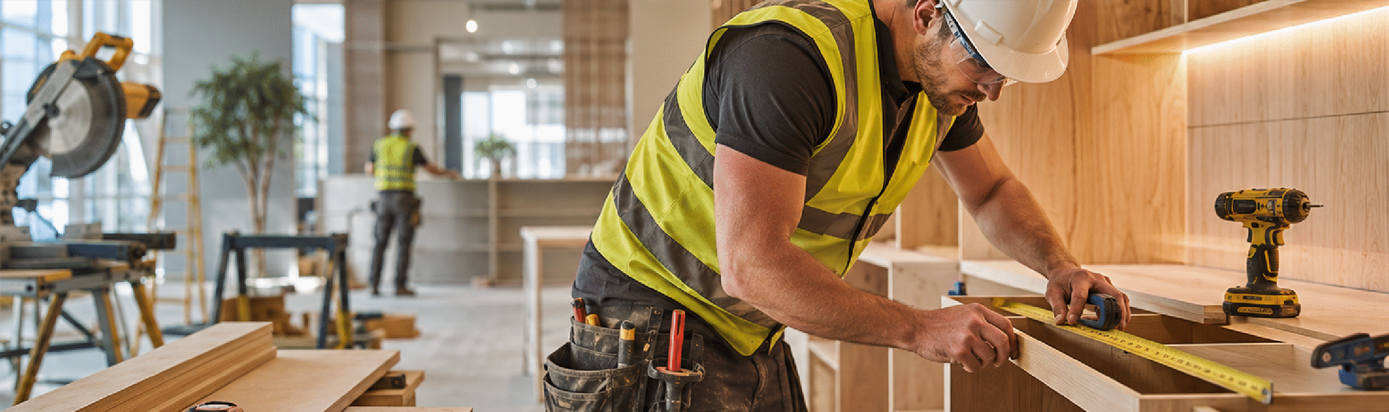
Carpenters and shopfitters play a major role in construction, renovation, retail fit-out and maintenance projects. Their work brings structure, detail, function and finish to a project. From timber framing and doors to counters, cabinets, shelving, wall panelling, partitions, skirtings and custom joinery, carpenters and shopfitters are often responsible for work that is both practical and highly visible.
However, this trade carries serious health and safety risks. Carpenters and shopfitters work with sharp tools, rotating blades, portable electrical equipment, timber, boards, adhesives, dust, fixings, ladders, scaffolding and heavy or awkward materials. They may work in busy construction environments, occupied buildings, tight spaces, retail stores, ceiling areas or near other trades.
Because the work often involves detailed finishing, workers may be tempted to rush, improvise, use tools in awkward positions or work around poor access. One unsafe cut, one damaged tool, one unstable ladder or one poorly controlled material lift can result in serious injury.
Carpenter and shopfitter safety must therefore be managed as a trade-specific issue. It is not only about producing a quality finish. It is about planning the work, using the correct tools, controlling dust, protecting hands and eyes, maintaining safe access, managing materials and ensuring that workers understand the risks linked to the job.
|
What Do Carpenters and Shopfitters Do on Construction Sites? Carpenters and shopfitters may perform a wide range of tasks depending on the project. Their work may include measuring, cutting, drilling, fixing, assembling, installing, sanding, trimming, levelling, fitting and finishing timber, boards, panels and joinery items. They may install doors, frames, skirtings, cabinets, counters, shelving, displays, reception desks, wall panelling, partitions, timber structures, shopfront elements and built-in furniture. Shopfitters may also work with laminates, MDF, plywood, solid timber, particle board, adhesives, sealants, screws, brackets, fixings and decorative finishes. Their work often requires the use of hand tools and portable electrical tools such as drills, circular saws, mitre saws, jigsaws, routers, sanders, grinders, multi-tools, nail guns, compressors and extension leads. Carpenters and shopfitters may work at ground level, from ladders, on scaffolding, in ceiling voids, near open edges, in public areas, in retail spaces or around other trades such as electricians, plumbers, ceiling installers, painters and flooring contractors. This makes the trade practical, detailed and physically demanding, but also high risk if the hazards are not properly managed.
Common Hazards Faced by Carpenters and Shopfitters Cuts and Amputations from Sharp Tools Carpenters and shopfitters work with sharp blades, saws, knives, chisels, planes and cutting tools. Poor tool control can result in deep cuts, lacerations, puncture wounds or amputations. The risk increases when workers use blunt blades, remove guards, cut unstable materials, hold workpieces by hand instead of securing them, or rush the task. Power Tool Hazards Portable electrical tools are used daily in carpentry and shopfitting. These tools can cause serious injuries if they are damaged, used incorrectly or not properly guarded. Circular saws, mitre saws, routers, grinders and sanders create risks such as blade contact, kickback, entanglement, flying particles, noise, vibration and electric shock. A tool that is not inspected, maintained or suitable for the task can quickly become dangerous. Dust Exposure Cutting, sanding, routing and drilling timber, MDF, plywood and boards can create dust. Fine dust can irritate the eyes, nose, throat and lungs. Some board products and treated timbers may create additional health concerns depending on the material and product used. Dust can also spread to nearby workers, contaminate finished areas and reduce visibility. Poor dust control is a common issue during shopfitting and finishing work. Eye Injuries Flying particles, wood chips, dust, splinters, broken blades, nails, screws and offcuts can cause eye injuries. Eye injuries often happen quickly and may occur during cutting, drilling, sanding, fixing or removing materials. Eye protection is essential when using tools or working near activities that create flying particles. Noise and Vibration Carpenters and shopfitters may be exposed to noise from saws, drills, routers, grinders, compressors and other tools. Repeated exposure to noisy tools can damage hearing over time. Vibration from power tools may also contribute to hand and arm discomfort, fatigue and reduced control if tools are used for long periods. Manual Handling and Ergonomic Strain Carpentry and shopfitting often involve lifting and moving boards, doors, counters, cabinets, timber, tools and equipment. Many items are heavy, large, awkward or difficult to grip. Workers may also bend, kneel, reach overhead, twist or work in confined positions. These tasks can lead to back injuries, shoulder strain, knee pain, wrist strain and fatigue. Adhesives, Sealants and Chemical Exposure Shopfitters may use adhesives, contact glue, silicone, sealants, fillers, solvents, cleaners and finishing products. These substances can cause skin irritation, eye irritation, headaches, dizziness or breathing discomfort if not handled correctly. Some products may also be flammable or require ventilation. Working at Height Carpenters and shopfitters often install high-level items such as bulkheads, shelving, signage structures, ceiling features, wall panels, overhead cupboards and trims. This may require ladders, scaffolding, mobile towers or platforms. Falls can occur when workers overreach, stand on unsuitable surfaces, use damaged ladders or work from incomplete platforms. Falling Materials and Tools Panels, timber, tools, fixings and equipment can fall from height if they are not properly controlled. This may injure workers below or damage finished surfaces. The risk increases when working overhead, installing large panels or fixing materials in busy areas. Electrical Risks Carpenters and shopfitters often use portable electrical tools and extension leads. Damaged leads, poor cable routing, wet areas, overloaded plug points or faulty tools can expose workers to electric shock and fire risks. Electrical tools must be inspected and used safely. Fire Risks Wood dust, timber offcuts, packaging, adhesives, solvents and electrical tools can create fire risks. Poor housekeeping, hot work, damaged electrical equipment or incorrect storage of flammable products can increase the danger. Poor Housekeeping Carpentry and shopfitting work can quickly create clutter. Offcuts, screws, nails, sawdust, packaging, cables, tools and materials can block access routes and create slip, trip and puncture hazards. Good housekeeping is especially important because shopfitting often takes place near finished surfaces, public areas or other trades.
What Can Go Wrong? When carpenter and shopfitter safety is not properly controlled, incidents can happen quickly. A worker may lose control of a circular saw and suffer a severe hand injury. A board may kick back during cutting and strike the worker. A nail or wood chip may enter the eye because eye protection was not worn. A worker may inhale dust during sanding in a poorly ventilated area. A shopfitter may strain their back while lifting a heavy counter or large board without assistance. A worker may fall from a ladder while installing overhead cupboards. A tool may fall from height and strike another person below. Adhesive fumes may affect workers in an enclosed room. A damaged extension lead may create an electric shock risk. Poor housekeeping can also cause incidents. Offcuts, screws, leads and tools left on the floor can cause slips, trips and puncture injuries. Sawdust and waste can create fire risk and affect other trades. In shopfitting, damage to finished surfaces can also become a costly issue. Unsafe work practices do not only cause injuries; they can lead to rework, project delays, client complaints and loss of reputation.
How to Prevent and Mitigate Carpenter and Shopfitter Safety Risks Plan the Work Before Starting Carpentry and shopfitting work must be properly planned. The work area, tools, materials, cutting zones, access, lifting requirements, dust control, chemical products, electrical supply and interaction with other trades should be considered before work begins. A task-specific risk assessment and method statement should be prepared where required. Workers must understand what work will be done, what can go wrong and what controls must be followed.
Use Competent Workers Carpenters and shopfitters must be competent to use the tools and equipment required for the task. Workers must understand how to operate tools safely, secure materials, use guards, manage dust and follow safe installation procedures. New or inexperienced workers must be supervised until they are competent.
Use the Correct Tool for the Task The correct tool must be selected for the job. Workers should not use unsuitable tools, damaged tools or improvised methods to complete a task faster. Blades, drill bits and accessories must be suitable for the material being worked on. Using the wrong tool can increase the risk of kickback, poor control and injury.
Keep Guards and Safety Devices in Place Tool guards and safety devices must not be removed, taped back or bypassed. Guards are provided to protect workers from moving blades and dangerous parts. If a guard prevents the work from being done correctly, the work method must be reassessed. The answer is not to remove the guard and continue.
Inspect Tools Before Use Power tools, hand tools, plugs, leads, blades, guards and switches should be checked before use. Damaged or unsafe tools must be removed from use and reported. Tools must be maintained in good condition and stored safely when not in use.
Secure Materials Before Cutting Materials should be properly supported and secured before cutting, drilling or routing. Workers should avoid holding small or unstable pieces by hand while cutting. Workbenches, clamps, saw horses or suitable supports should be used to improve control and reduce kickback risks.
Control Dust at the Source Dust should be controlled as close to the source as possible. This may include dust extraction, vacuum systems, wet methods where suitable, local ventilation or controlled cutting areas. Workers should avoid dry sweeping where this creates airborne dust. Respiratory protection may be required where dust cannot be adequately controlled.
Use Suitable PPE PPE must be selected according to the task. This may include safety glasses, hearing protection, dust masks or respirators, gloves, safety footwear, hard hats, high-visibility clothing and protective clothing. Gloves must be suitable for the task. Workers must be careful when using gloves near rotating machinery, where entanglement may be a risk.
Control Manual Handling Large boards, doors, cabinets, counters and shopfitting components should be handled with proper planning. Team lifting or mechanical assistance should be used where required. Materials should be delivered close to the work area where possible, without blocking walkways or emergency routes. Workers should avoid twisting, overreaching or carrying awkward loads alone.
Provide Safe Access Where work is carried out above ground level, safe access must be provided. Ladders, scaffolding, mobile towers or platforms must be suitable and inspected before use. Workers must not stand on buckets, chairs, boxes, shelves or unstable surfaces. If the work cannot be reached safely, the access method must be changed.
Control Falling Objects When working overhead or at height, tools and materials must be controlled. Areas below should be managed where there is a risk of falling objects. Only the tools and materials required for the immediate task should be kept at height. Larger items should be lifted, positioned and fixed in a controlled manner.
Manage Adhesives and Chemicals Safely Safety Data Sheets should be available for adhesives, sealants, solvents, fillers and finishing products. Workers must understand the hazards, required PPE, ventilation needs, storage requirements and first aid measures. Containers should be closed when not in use, and flammable products must be kept away from ignition sources.
Maintain Good Housekeeping Work areas must be kept clean and organised. Offcuts, sawdust, packaging, nails, screws, cables and tools should be cleared regularly. Good housekeeping reduces trips, puncture injuries, fire risks and damage to finished work.
Communicate with Other Trades Carpenters and shopfitters must coordinate with other trades, especially where work involves cutting, dust, noise, overhead installation, access equipment, temporary power or protection of finished surfaces. Other workers should be kept clear of cutting areas, installation zones and areas where falling materials may occur.
Legal Requirements Linked to Carpenter and Shopfitter Safety Carpenter and shopfitter safety on construction sites is supported by the Occupational Health and Safety Act and applicable regulations. Section 8 of the Occupational Health and Safety Act requires employers to provide and maintain, as far as reasonably practicable, a working environment that is safe and without risk to employees. For carpentry and shopfitting contractors, this means identifying hazards, providing safe systems of work, maintaining tools and equipment, providing training and supervision, and enforcing safety measures. Section 9 requires employers and self-employed persons to conduct their work in a way that does not expose other persons to health and safety hazards. Carpentry and shopfitting work can affect others through dust, noise, falling materials, sharp offcuts, blocked access, poor housekeeping and unsafe tool use. Section 13 requires employers to inform employees of the hazards linked to their work and the precautionary measures that must be followed. Carpenters and shopfitters must be informed about risks such as cutting tools, dust, adhesives, manual handling, working at height, falling objects and electrical tools. Section 14 requires employees to take reasonable care for their own health and safety and the safety of others. Workers must follow procedures, use equipment correctly, wear required PPE, cooperate with the employer and report unsafe conditions. Where carpentry and shopfitting forms part of construction work, the Construction Regulations are also relevant. These regulations require proper planning, risk assessments, competent supervision, safe access, control of work areas, housekeeping, fall protection where required, and safe use of tools and equipment. The General Machinery Regulations are relevant where machinery and power tools are used. Machinery must be suitable for its intended purpose, maintained to prevent hazardous conditions, and dangerous moving parts must be properly guarded. Workers operating machinery must also be aware of the dangers and the precautions required. The Environmental Regulations for Workplaces may apply where dust, noise, ventilation, lighting and housekeeping affect the health and safety of workers. Where adhesives, solvents, sealants or other chemical products are used, hazardous chemical controls must be considered. Workers must understand the product hazards, exposure controls, PPE, storage requirements and emergency actions.
Common Compliance Mistakes Made by Carpenters and Shopfitters One common mistake is using power tools without proper guards or with guards tied back. This can expose workers to serious blade contact injuries. Another mistake is using damaged or unsuitable tools because the work is urgent. Damaged plugs, leads, blades, casings and switches must not be ignored. Dust control is often weak, especially during sanding, cutting MDF or working indoors. Workers may continue without extraction, ventilation or respiratory protection. Manual handling is also frequently underestimated. Large boards, cabinets and counters are often carried without enough assistance or planning. Poor housekeeping is another common problem. Offcuts, screws, sawdust, tools and cables are often left in walkways, creating trip and puncture hazards. Working at height may also be poorly controlled. Workers may use ladders incorrectly, overreach, stand on furniture or work from unstable surfaces. Chemical products such as adhesives and solvents may be used without reviewing Safety Data Sheets or providing proper ventilation.
Why Carpenter and Shopfitter Safety Matters to the Business Carpentry and shopfitting work often has a direct impact on the final quality and appearance of a project. Poor safety management can result in injuries, damaged finishes, rework, delays and client complaints. A serious injury from a saw, fall from height, dust exposure issue or damaged finished product can stop work and affect the entire programme. On the other hand, carpenters and shopfitters who manage safety properly are seen as professional, reliable and competent. Clean, organised and safe work supports productivity, protects workers, reduces waste and helps deliver a quality finish. Carpenters and shopfitters are essential to construction, renovation and fit-out work, but their trade carries real health and safety risks. Sharp tools, power tools, dust, adhesives, manual handling, working at height, falling materials, electrical tools and housekeeping must all be properly controlled. Safe carpentry and shopfitting work requires planning, competent workers, correct tools, machine guarding, dust control, suitable PPE, safe access, good housekeeping and proper supervision. When carpenters and shopfitters work safely, the project benefits from both better protection and better quality.
Need Help with Carpenter and Shopfitter Safety Compliance? Zenith Safety Consultants can assist carpentry and shopfitting contractors with health and safety files, risk assessments, method statements, legal appointments, toolbox talks, site inspections and practical construction safety support. Contact Zenith Safety Consultants to ensure your carpentry and shopfitting safety documentation and site controls are practical, compliant and suitable for the work being performed. For more information on how Zenith Safety Consultants can help your business, please contact us at This email address is being protected from spambots. You need JavaScript enabled to view it. or call 021 010 0209. |

 Talk to us!
