
Section 9 of the Occupational Health and Safety Act: Your Duty to Protect the Public, Clients and Visitors
Health and Safety Responsibilities Extend Beyond Your Employees
When most employers think about occupational health and safety, their focus is naturally on protecting their employees. While this is a fundamental requirement of the Occupational Health and Safety Act (OHSA), many businesses overlook another equally important legal obligation: protecting people who are not employees.
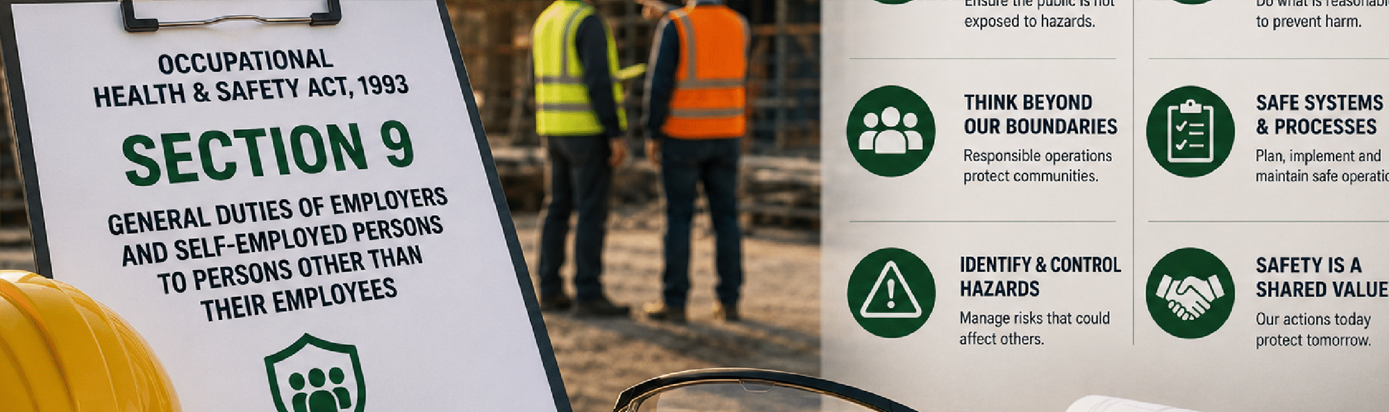
Section 9 of the Occupational Health and Safety Act, 1993 places a legal duty on employers and self-employed persons to ensure that their activities do not create health and safety risks for members of the public, clients, visitors, contractors, suppliers, tenants, customers, or any other persons who may be affected by their operations.
In practice, this means that workplace safety extends beyond the boundaries of your workforce. Any person who may be directly affected by your activities must be considered when identifying hazards, implementing controls, and managing risks.
|
What Does Section 9 of the Occupational Health and Safety Act Say? Section 9(1) states that every employer must conduct their undertaking in such a way that, as far as is reasonably practicable, persons other than employees who may be directly affected by the employer's activities are not exposed to hazards to their health or safety. Section 9(2) places a similar obligation on self-employed persons, requiring them to ensure that both they and any other persons affected by their activities are not exposed to health and safety hazards. The phrase "reasonably practicable" is important. It means employers and self-employed persons must take all reasonable steps to identify hazards, assess risks, and implement suitable control measures to prevent harm. Who Does Section 9 Protect? Many businesses mistakenly believe that health and safety legislation only applies to workers. Section 9 clearly extends protection to a much wider group of people. These may include:
If your business activities have the potential to affect another person, Section 9 applies. Real-World Examples of Section 9 in Action Construction Sites Construction projects often take place in public areas where pedestrians, neighbouring businesses and residents may be exposed to risks. Potential hazards include:
Employers are expected to implement measures such as barricading, warning signage, controlled access points, exclusion zones and housekeeping procedures to protect members of the public. Warehouses and Distribution Centres Visitors, suppliers and drivers frequently enter warehouse environments. Potential hazards may include:
Appropriate pedestrian walkways, traffic management systems and visitor induction procedures help reduce these risks. Office Buildings Even office environments present risks to non-employees. Examples include:
Clients and visitors entering the workplace should be protected from foreseeable hazards in the same way employees are. Maintenance and Service Contractors A self-employed electrician, plumber or technician working at a client's premises must ensure that their work does not create dangers for occupants, visitors or members of the public. For example, leaving exposed wiring, unsecured tools or open access panels could place others at risk and may result in a breach of Section 9. Common Ways Businesses Fail to Comply Many Section 9 violations occur because organisations focus exclusively on employee safety and fail to consider external parties. Common examples include: Poor Barricading Construction or maintenance activities are performed without adequate barriers, allowing members of the public access to hazardous areas. Inadequate Signage Visitors may not be warned about hazards such as overhead work, excavations, chemical use or vehicle movements. Uncontrolled Access Unauthorised persons are allowed to enter work areas without supervision or safety controls. Unsafe Deliveries Loading and unloading activities are carried out without managing pedestrian and vehicle interactions. Failure to Consider Neighbours Noise, dust, fumes and other environmental impacts are allowed to affect neighbouring properties without adequate controls. Lack of Visitor Management Visitors enter operational areas without receiving safety instructions or being accompanied by authorised personnel. Practical Steps to Comply with Section 9 Conduct Risk Assessments Risk assessments should consider not only employees but also anyone else who may be affected by workplace activities. Ask questions such as:
Control Access Restrict access to hazardous areas through:
Implement Effective Housekeeping Good housekeeping reduces many common hazards including slips, trips, falling objects and obstruction of emergency routes. Use Appropriate Signage Warning signs should clearly identify hazards and direct visitors away from dangerous areas. Develop Traffic Management Plans Where vehicles and pedestrians interact, suitable traffic control measures should be implemented. Supervise Contractors and Visitors Visitors and contractors should understand site rules and be accompanied where necessary. Review Emergency Procedures Emergency arrangements must consider visitors, clients and contractors, not just employees. Why Section 9 Is Important for Businesses Many workplace incidents involving visitors or members of the public can result in severe consequences for businesses. Potential consequences include:
A single incident involving a member of the public can have significant financial and legal implications for an organisation. Section 9 and a Strong Safety Culture The most successful organisations understand that safety does not stop at the employee gate. A mature health and safety culture considers everyone who may be affected by business activities. This includes employees, contractors, visitors, suppliers, clients and members of the public. When organisations proactively manage these risks, they not only comply with legislation but also demonstrate professionalism, responsibility and care for the communities in which they operate. Conclusion Section 9 of the Occupational Health and Safety Act reminds us that workplace safety extends beyond employees. Employers and self-employed persons have a legal responsibility to ensure that their activities do not expose others to health and safety hazards. Whether you operate a construction site, warehouse, office, factory or service business, protecting visitors, contractors, customers and members of the public is a critical component of legal compliance and responsible business practice. By conducting comprehensive risk assessments, implementing practical controls and maintaining a proactive safety culture, organisations can meet their Section 9 obligations while creating safer environments for everyone affected by their operations. Need Assistance with Occupational Health and Safety Compliance? Zenith Safety Consultants assists businesses throughout South Africa with risk assessments, health and safety files, audits, legal compliance inspections, contractor management and occupational health and safety systems. Contact Zenith Safety Consultants today to ensure your organisation remains compliant and protects everyone who may be affected by your operations. Contact Zenith Safety Consultants to ensure your site documentation and safety practices are practical, compliant and suitable for the work being performed. For more information on how Zenith Safety Consultants can help your business, please contact us at This email address is being protected from spambots. You need JavaScript enabled to view it. or call 021 010 0209. |

 Talk to us!
